


Sunday, December 19, 2010
Saturday, December 18, 2010
Solid waste recycling and importance of environmental and economic

Recycled and benefit from, rather than be thrown randomly as is the case we have now where thrown garbage on the sides and edges of the main and branch roads, as well as in agricultural land, or to convey to the dump in the garbage to be collected and then landfilled without treatment and have turned some countries to use the methods of modern technology to take advantage of solid waste.
The method of recycling waste and importance of environmental Eng Mohammed Rahmoun - Deputy Chairman of the Department of rehabilitation and training in the Agriculture Department of Homs, having visited the scientific of the University of Davis, California as a visiting scholar to conduct research and experiments on organic farming and natural resource protection and management of ecosystems, he said: take advantage of the waste
Developed countries are using the latest state of the art techniques for the use of waste and recycling through:
- Take advantage of household waste by turning it into organic fertilizer with high quality.
- Take advantage of solid waste by dry screening.
Are available several ways to retrieve useful materials from solid waste and re-use them, and these ways:
Magnetic sorting and counting, as well as the antenna is isolated as components of waste for recycling after composting can take advantage of waste grease in the manufacture of soap, candles and furniture of domestic large-size re-use and transported by specialized companies.
And facing the process of recovery of materials from waste two main problems: A - favoring the use of raw materials recovered.
B - the high cost of separation and collection, transfer and processing of recovered materials.
And are sometimes re-use of waste without taking into account their health effects.
Sorting and separation of waste
The separation of materials from the source has its benefits, including: The materials stay clean and non-mixed which requires the cooperation of the population.
And materials that can be separated from the source: paper - glass bottles, plastics and rubber .. The process of separation usually in a factory sorting waste where it is sorted waste blended before sending each material sorted into production factories for glass and paper, aluminum, or to the factories of recycling for fertilizer and organic plastics of all kinds and there is household waste is sorted for being hazardous wastes such as batteries, paints, and is collected from the source or transferred to the collection sites of hazardous household waste and this waste is not related to industrial hazardous waste.
Recycling process are interdependent
Can be defined recycling as several interrelated to each other begin to collect materials that can be recycled and then sorted by type to become a raw material suitable for manufacturing to be converted to usable products and the most important of recyclable waste are: iron, aluminum, paper, glass, wood and recycling lead to a reduction of the adoption of factory on materials Kkhamat natural essential for its products and thereby to reduce the depletion of these natural materials, and environmental and economic benefits of recycling are:
1 - reduction of environmental pollution from the disposal of waste by burial or cremation.
2 - maintenance of natural materials.
3 - Reduce reliance on imported raw materials.
4 - To provide opportunities for new industrial.
5 - Provide new employment opportunities and the provision of energy.
And good practices in the assembly for the purpose of recycling is to create a collection centers neighborhoods, and a collection container near the commercial centers, and requiring restaurants and other centers to send materials after the sorting to the nearest collection center.
And reducing waste means reducing the amount of waste from the source, while waste recycling is the use of waste instead of raw materials in factories and production both cases, dilute the waste going to the burial sites and therefore financial savings, material and energy saving, for example, aluminum cans can be recycled several times.
Energy recovery
Access to energy from waste economic target is important, as well as the reduction in the volume of waste, and adopt the amount of energy generated by components of the waste and the percentage of moisture and latent heat energy and the proportion of combustible materials in the waste between 70% -80% of the weight of the waste.
And waste energy normally used for heating and electricity generation as is the case in Scandinavia ..
The recycling of waste is the perfect solution to get rid of waste and environmentally beneficial economic when the availability of capital, technology and trained manpower.
Among the benefits of recycling waste as well as to conserve the environment by reducing pollution budget for cleaning contracts and the creation of investment opportunities because of the availability of raw materials and replacement of some alternative products Kahlal products of plastics instead of wood products, for example.
Most of the operating costs of the screening program from the source resulting from the sorted waste collection and operation of the sorting center. The most important benefit of the sort of source is to get good results, and prices relatively high in the office market, cardboard, glass, rubber and needs sorting Almsdrily lower cost of capital was used to create the store to the collection of waste sorted and the sort method from the source appropriate for communities far from the sites sort of central, the most economical way possible and preferred to municipalities because they do not want to move the waste and buried in burial sites, but you need municipalities to active participation by society and the creation of markets consumers of these materials on an ongoing basis so this method requires the cooperation of the public to make it work, I have found that more people have the desire to sort from the source are affected by negative from landfills.
recycling project
 |
| Waste recycling project |
SchoolStudent waste recycling plant
[[Comes the role of the student in the school viable waste collection for recycling and preparation for transport to the recycling factory ">">.Project Objectives:
1 - make the student part of the cycle of major waste recycling at the level of major home environment
2 - to send a message to parents and the community through their children that we all live in this environment, and we must cooperate to make them healthy and safe
3 - Strengthening cooperation between the student and the school and with community service organizations and others.
4 - strengthen the role of the school through its students and education of their role in the community and get them used to serve themselves and their community through waste recycling project.
5 - to feel the student the importance of the material between the hands and the high price in the future.6 - to promote a sense of belonging to school and the need to preserve them.
The agenda of the waste recycling project school:
1 - manufacture of specialized containers for different waste (garbage can) be placed in class:
A - a custom basket of leaves damaged.B - a custom basket of plastic.C - basket dedicated to waste the rest of the class.2 - manufacture of specialized containers for different waste (large boxes) are placed in the school yard:
A - Fund dedicated to the damaged leaves.B - Fund dedicated to plastic.C - Fund dedicated to waste the rest of the class.
3 - the establishment of school environmental competitions:
- A - Competition between the rows (to collect as much of the waste). Row ideal conservative on the environment.- B - Competition between the students on the day of activity (of gathering the largest number of plastic containers) - c - competition for the best way to recycle waste (device). - D - Competition for the best research on waste recycling.
4 - get the gifts from recycling companies bearing the logo of recycling.
A - T-shirts - Hats - recreational trips to natural areas beautiful.
5 - Holding Safaris (educational - recreational - the process of) school.
A - Trip (educational): Visit natural museum.B - a journey (process): Clean beaches - parks -Community surrounding the school.D - Trip (entertainment): visit the parks.Its aim is to compare the student with a clean environment and other non-clean.
6 - advertising campaign school for recycling:
A - Preparation of wall magazines illustrate the concept of recycling waste.B - Place ads environmental patrol on bulletin boards at school.C - Develop logos designed by students for waste recycling inBulletin boards.- D - agenda-setting activities of the school recycles waste.
7 - forming a group waste recycling:
Forming a group of students from the recycling school discerning, to implement the different aspects of the project (making Models - making organs of the waste - the implementation of the trips)
Thursday, December 16, 2010
What is Electronic Waste?
Modern technology provides society with many conveniences, from Wi-Fi enabled cell phones and ever-smaller laptop computers that make our entire lives portable to energy-efficient washers and dryers that use half the power and time to complete their tasks. However, these new toys and gadgets leave behind them a wake of outdated, unwanted contraptions.
It's all electronic waste and it includes everything from empty printer ink cartridges to broken refrigerators. As people purchase new items to replace aging electronics or make upgrades, more electronic waste is generated. In some cases, such as 2009's switch from analog to digital television broadcasting in the United States, changes in technology are so great that old equipment may not even work at all with new systems.
There are many reasons why it is important to recycle electronic waste. Much of the material used to construct electronics, including metal and plastic components, can be recycled into new items at a fraction of the cost and energy use needed to create things from new raw materials. Additionally, many electronics contain toxic substances that are harmful to the environment and could be catastrophic if leached into an area's groundwater. For example, television tubes contain mercury, which is known to be extremely poisonous. When properly recycled, electronic waste is stripped of all toxins and other harmful materials, which is then properly and safely disposed of. Because of these environmental concerns, many areas require by law that electronic waste be properly recycled.
The availability of electronic waste recycling programs varies from place to place. Some municipalities may provide such services to area residents. In some areas, annual collections are held once or twice a year as a means of disposing of electronic waste as well as used engine oil or other waste that is harmful to the environment. When purchasing new appliances that are being delivered, retailers like Sears often offer free removal of the appliance that is being replaced. Since some appliances, such as refrigerators, cannot be disposed of without costly removal of hazardous substances, this saves you not only time but money as well! Other retailers, like Best Buy, also offer electronic waste recycling programs to their customers.
There are also some good alternatives to recycling your electronic waste. Any items that are in working condition can be given to friends or donated to charities like Goodwill or the Salvation Army, who rely heavily on donations. Freecycling, or passing on your unwanted items to those in need of them, is also a means of finding new homes for used items. Websites like Craigslist and Freecycle.org are good places to list any usable items you would like to give away. Interested parties can contact you to ask any questions they may have about your items and to arrange picking up their new treasures.
Electronic waste recycling helps preserve the environment by reducing the amount of toxic materials placed in landfills and salvaging recyclable components to save energy and other resources. Contact your local government officials or waste management companies for details on any e-waste recycling programs in your area.
Darla Blackmon writes about the environment and eco-topics at http://www.everythinglongbeach.com, a community website that covers local news, events and health. Visit the site to learn about Long Beach recycling and how the Southern California city is going green. Article Source: http://EzineArticles.com/?expert=Darla_Blackmon |
About E-Waste Recycling Electronic Waste in Canada
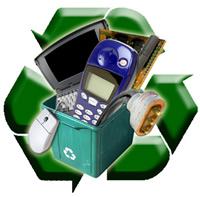 Since around 2004, Canada has taken a large interest in e-waste recycling electronic waste. Items such as cell phones and computers are considered to be hazardous waste materials and cannot be disposed of in a landfill. The reason that this is so important is because those electronics can contain materials such as mercury or lead, which can be harmful not only to human beings, but also to the environment.
In previous years, Canada disposed of e-wastes via other methods instead of recycling. While recycling was used, it wasn't the majority choice. In example, for 2002, there were 157,000 metric tons of waste that were disposed of. However, out of that statistic, only 9,000 was disposed of via recycling. It is estimated that junk removal disposal has grown to 206,000 metric tons in 2010 already.
The main goal is to keep the e-waste out of the landfills. In landfills, when not properly disposed of, the waste can still affect the population and ultimately the planet. The best way to keep such wastes out of landfills then, is to recycle them. This can be done at many drop-off points that can be found in Canada.
However, there are still many people that do not know that e-waste is even capable of being recycled. Many people do not know that items such as cell phones, computers, and other types of electronics cannot be recycled. The key to making sure that this changes is to further educate the public about the need for e-waste recycling in their area.
There are many non-profit organizations in Canada that will assist those who are interested in contributing to the recycling program. Primarily, you will find many programs that are dedicated to the recycling of items such as rechargeable batteries and cell phones. However, there are other programs that are dedicated to the e-waste recycling movement as a whole. Contacting these programs can give you more information about where people can drop off their used electronics.
There are also companies that have become concerned about e-waste and are doing what they can to contribute to the effort of promoting recycling. For example, Sony has created its only recycling program. People who would like to dispose of Sony products that they are no longer using are encouraged to send the electronics back to the company. In return, the company recycles the old products for the individuals. There are many companies that are beginning to also offer similar options.
Overall, the process of e-waste recycling still has a long way to go. Canada is making a large effort to reduce much of the e-waste that is prevalent in society. However, there is still a large majority of people who do not know what e-waste is or even the basic facts about e-waste recycling. It is up to those who are educated about these things to share information and promote recycling for the greater good of the era and the environment everywhere.
If you would like to know more about e-waste recycling electronic waste and how you can contribute, there are several things that you can do. Consider finding out if there are any local programs in your area that promote the recycling of electronic waste. You can find these via the internet and many local resources. Once you've found a program to participate with, consider spreading the word to others that you know might be interested.
The environment can be better protected. If you are looking for a junk removal and Toronto garbage removal company. It is important for individuals to be mindful of what is in the trash and Toronto rubbish removal
Article Source: http://EzineArticles.com/?expert=Adriana_A_Noton
Wednesday, December 15, 2010
Tuesday, December 14, 2010
Stay Eco-Friendly by Adopting Proper Waste Collection and Recycling Service
Gone are the days when waste materials were carelessly dumped down the drain or onto the ground. Increasingly, waste substances are finding their way to licensed waste storage facilities, where they are stored in drums or tanks. Nowadays the waste segregation that we do in our workplace and residential areas are very much appreciated, it is very necessary that after gathering the wastes there should be a proper waste collection service that will ensure that these things get to their destinations safely and orderly as proper waste disposal is now treated as a business liability.
Waste management is undertaken to reduce the effect of released material on health, the environment or aesthetics. Waste management is also carried out to recover resources from the disposed material through recycling. The more waste we generate; the more we have to dispose of. If these waste products are not properly disposed off according to the content which may even be hazardous then it can actually become a great environmental issue related to the biosphere being exposed to dangerous materials. So in order to conserve energy and resources one of the best methods of waste disposal is through recycling them.
These waste collection services are often provided by local government authorities, or by private industry. Well-organized waste management services will always be a priority for those who are managing waste disposal efforts in cities and other places. When there is a proper waste and recycling service, the people find it a lot easier to follow waste management techniques. It is therefore necessary to choose a proper business waste collection service that will fulfill the requirements of the people and provide the necessary functionality for proper waste management and safety.
Waste management strategies include the "3 Rs" reduce, reuse and recycle wherein recycling holds the premium importance as man-made products like glass, plastic bags and aluminum cans may take months or years to break down as they are not biodegradable substances. Recycling helps to conserve energy and depleting resources like wood, water and minerals thus giving a direct boost to the economy. It also reduces scrap filling landfill sites, eliminates non bio-degradable waste thus prevents the destruction of natural habitats and building a world which is much cleaner and greener. Recycling is one of the most important acts to follow in our daily lives because it can help sustain the environmental productivity and also provide better air and water quality.
Anyone who wants effective and regular waste collection service can visit our waste recycling services London. Article Source: http://EzineArticles.com/?expert=Frau_Simo |
Waste Management and Recycling - 7 Tips to Reduce Your Costs
1. Shop around a little: The larger organisations will call this "benchmarking" and there is no reason why you cannot carry out the same basic exercise. If you have used the same waste management company for a number of years, you have probably gone through a number of annual price rises. A simple phone call to other waste management companies in the area will soon give you an idea of whether you are paying far too much. If you have a good relationship with your existing supplier, there is nothing to stop you approaching them with this new information and renegotiate. Sitting back and accepting inflation-busting compounded price increases, however, will only lead to you paying a lot more than your competitors do.
2. What is your waste? If you realise that most of the waste you produce is light-weight, clean materials such as paper and cardboard, then there is no reason why you should be paying as if the waste were something completely different. Such materials should not end up in landfills, as they are easily recyclable, reducing the comparative processing cost for the waste management company. Even if your waste is non-recyclable and does finally end up in landfill, then the light weight means you should not have to pay as much as you perhaps are doing.
3. Where is your waste? If your organisation is spread over more than one site, it is possible that you are paying too much. By having a number of containers over a number of sites, your waste management contractor must empty each container at each site every time. This obviously costs more than having all waste at one site. If you have any movements of vehicles between your sites, then attempt to use those movements of empty space to bulk up all of your waste at that point and have it collected from there.
4. When is your waste collected? If your waste is all much the same, but collected in a number of containers, you may be able to save money by reducing the number of collections. This could be done by obtaining a larger container, or even a compactor, and having much larger amounts of waste collected less frequently. This could also be achieved by having more containers on site, but collected less often.
5. How is your waste collected? The cheapest way to pick up many types of waste is by having the least number of containers permanently sited on an organisation's premises. This way, the contractor visits the container on a fixed schedule, rather than having to collect the container and exchange it for another one. This change can reduce the transport costs involved by half, but is not suitable for all classes of wastes.
6. Who is collecting your waste? You need to make sure that the company collecting your waste is properly registered and licensed to do so. Otherwise, you could be liable to severe penalties if your chosen waste management company fails to carry out their task legally. This could lead to substantial fines, which you would be liable for, not the contractor. Saving money by using unlicensed waste management companies will not save you money in the long term when you are surprised by a hefty fine! You have the right to ask for copies of your contractor's waste management licenses to carry and manage waste.
7. Finally, why do you produce waste? It may seem obvious, but is there anything you could be doing to reduce the amount of waste you generate? An effective waste management company should be able to advise on such initiatives that enable you to minimise the waste your organisation produces, reducing the need for further services and saving you money.
The author writes on behalf of DTS Waste Management, the leading waste collection, waste management and recycling company based in South Yorkshire, England. Article Source: http://EzineArticles.com/?expert=David_Thackray |
Additional Information On Recycling

The above definition explains how recycling can be as simple as re-using a given product beyond its intended use. This can be as simple as passing old clothes on to charities, friends, or relatives, in order for someone else to make use of the items. Recycling is more commonly associated with the process where old goods are re-manufactured, allowing them to be turned into new products. There are many reasons why you should recycle, which show why recycling is important for the future of our planet. The term "reduce, reuse, recycle" is commonly used to provide simple guidance for people wishing to do their part: Reduce: We need to reduce the amount of the earth's resources we use to make products which may not be essential. Reuse: We need to adopt the habit of reusing products. Don't just throw an item away, instead, why not see if a friend, relative, or charity can make use of the item. Recycle: We need to be able to identify old products which could be made into something new. Is the product recyclable? To identify recyclable products, the universal recycling logo/symbol was introduced. The logo can be used for a variety of different reasons, for example, a recycling symbol with a percentage inside identifies a product made from recyclable material, and doesn't necessarily mean it can be recycled. Some materials are much harder to recycle than others. Plastic based products can be very hard to recycle, when compared with paper based products. For materials which are hard to break down, if we need these products for a vital purpose, then we should purchase durable goods which will last for a very long time, reducing the need to replace the item in the near future.


Join The Community